Skip to content

Research & innovation · Case study

NutriRoti: familiar food, applied nutrition research

A food-to-food fortified wheat flatbread research project led by Prof. Dr. Rubina Hakeem, CEO of LiveGreen Academy, in collaboration with academic and nutrition partners.

Read the case study

The project

Nutrition innovation rooted in everyday food

Low diet diversity and food insecurity can leave wheat-reliant diets nutritionally incomplete. NutriRoti—also documented as Nutribread or Nutribreads—explores a practical response: enrich a familiar, affordable staple with locally available nutrient-rich foods instead of asking communities to adopt unfamiliar eating habits.

Project materials identify powdered milk, guava, wheat germ oil, spinach and rice bran as ingredient examples. The research explores culturally appropriate ingredient choices, affordability, nutrient density, palatability and feasibility.

The work connects population nutrition needs to a food concept, then to community acceptability assessment and a pilot nutrition study. It demonstrates how nutrition expertise can translate into culturally relevant food concepts, community evaluation and opportunities for further development.
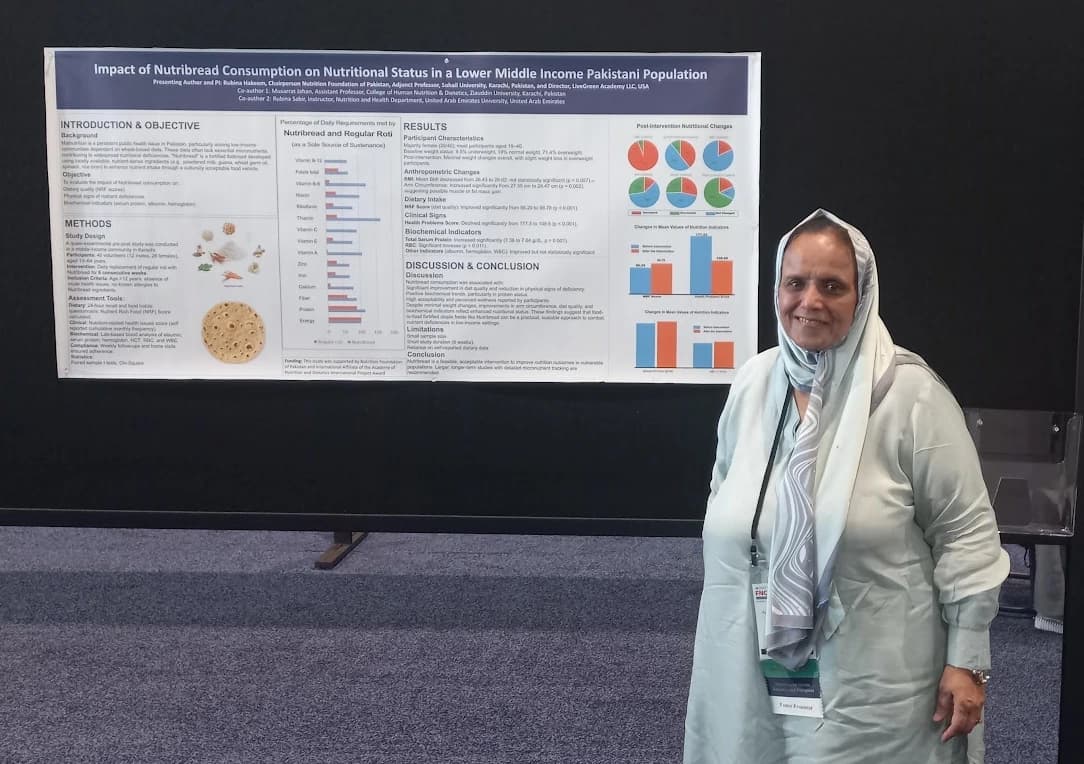
Prof. Dr. Rubina Hakeem beside the Nutribread research poster at FNCE 2025
Prof. Dr. Rubina Hakeem presenting the project at the Food & Nutrition Conference & Expo, 2025.

Leadership in practice

From nutrition need to community research

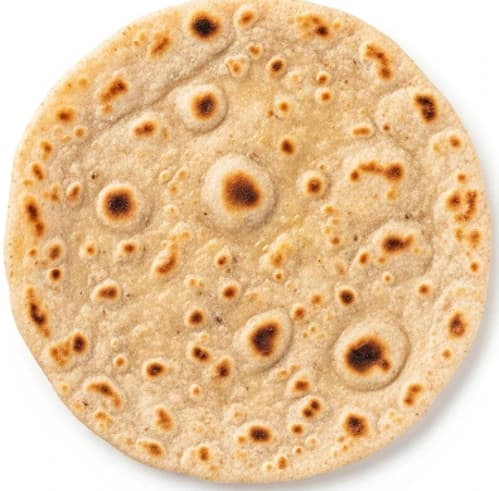
Flatbread illustration from the NutriRoti project poster
A familiar food vehicle: flatbread illustration from the project poster.

Prof. Dr. Hakeem's leadership brings together applied nutrition, food composition, community assessment and professional collaboration. The project demonstrates capabilities in identifying population nutrition needs; selecting a culturally appropriate food vehicle and ingredient options using composition data; and assessing acceptability before considering broader implementation.

The pilot also involved nutrition-focused physical assessment, dietary and biochemical analysis, and communication of findings to an international research audience, working with academic and nutrition collaborators.

  • Population nutrition assessment
  • Culturally relevant food concept design
  • Acceptability and sensory assessment
  • Community pilot research
  • Dietary, clinical and biochemical measures
  • International research communication
Director profile

Recognition & dissemination

A project shared across professional settings

2021 · Team recognition

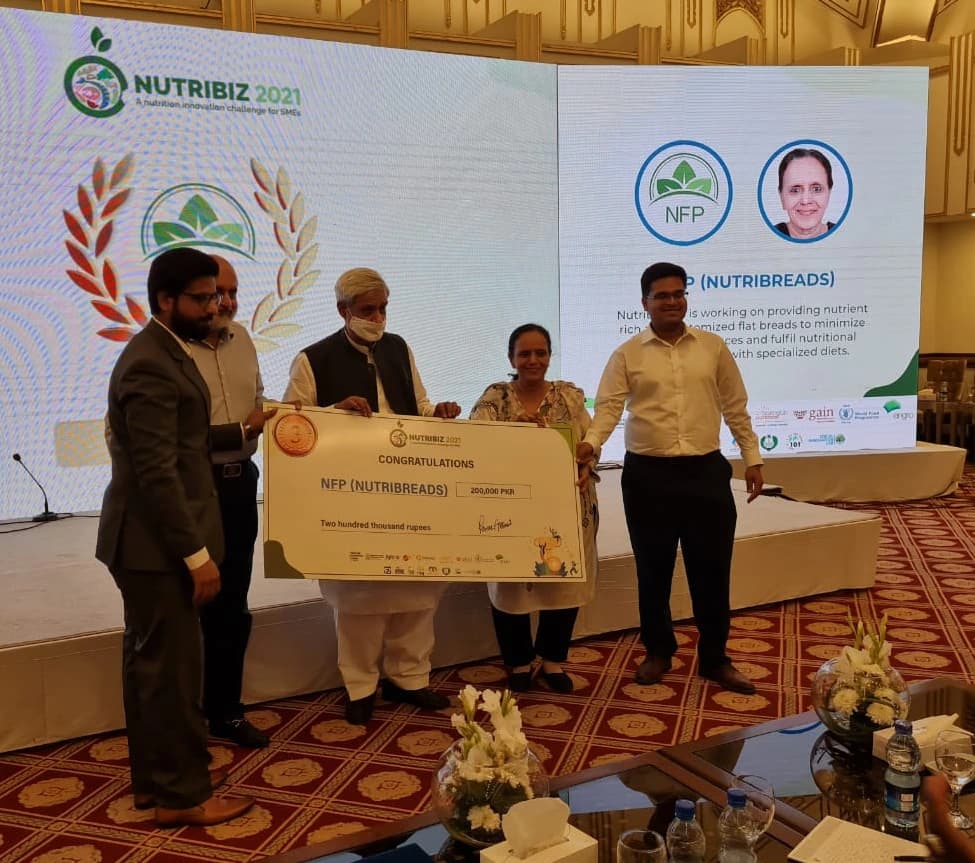
Third Prize · NutriBiz Nutrition Innovation Challenge

The Nutrition Foundation of Pakistan (NFP) Nutribreads team received third prize in the 2021 challenge—an early milestone recognising the project's food-based nutrition innovation.

Read the published event coverage

2023 · Professional recognition

International Project Award

Prof. Dr. Rubina Hakeem was selected as recipient of the 2023 International Affiliate of the Academy of Nutrition and Dietetics International Project Award, awarded by the Academy of Nutrition and Dietetics Foundation.

Four members of the NFP/Nutribreads team at the NutriBiz Nutrition Innovation Challenge award event
Prof. Dr. Rubina Hakeem with the NFP/Nutribreads team at the 2021 NutriBiz award ceremony.

Published conference abstract

Preliminary findings from a community pilot

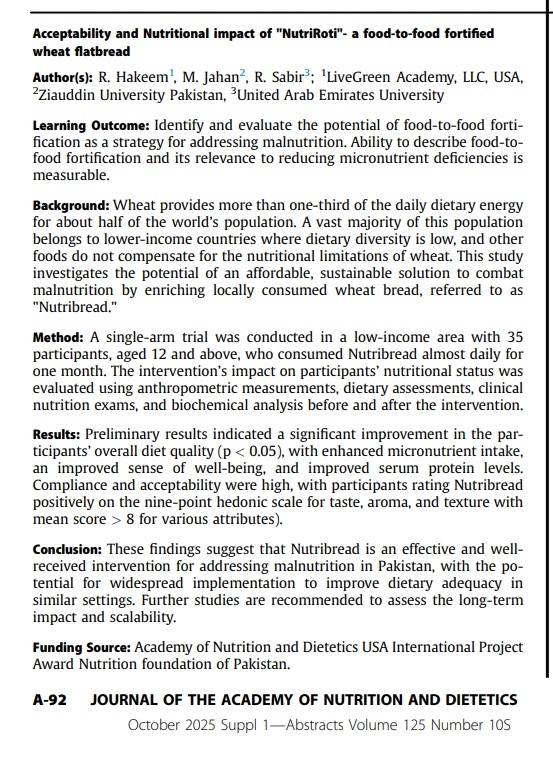
The published abstract reports a single-arm community trial in a low-income area. Thirty-five participants aged 12 and above consumed Nutribread almost daily for one month. Pre- and post-assessments included anthropometry, dietary assessment, clinical nutrition examinations and biochemical analyses.

35
participants aged 12+
1 month
community pilot period
>8 / 9
mean scores on several sensory attributes
  • Diet quality: the abstract reports an improvement in overall diet quality (p<0.05) and enhanced micronutrient intake.
  • Other reported measures: perceived wellbeing and serum protein improved over the assessment period.
  • Acceptability: compliance and acceptance were high, with mean scores above 8/9 for several sensory attributes, including taste, aroma and texture.

These are preliminary findings associated with participation in the pilot, not proof of causation or a clinical treatment effect. The study had no control group, a small sample and short follow-up. Further research is needed to examine long-term effects, reproducibility and scalability.

Scan of the published NutriRoti conference abstract pageView published abstract
Hakeem R, Jahan M, Sabir R. “Acceptability and Nutritional Impact of ‘NutriRoti’—a food-to-food fortified wheat flatbread.” Journal of the Academy of Nutrition and Dietetics. October 2025;125(10S), Supplement 1—Abstracts, p. A-92. Conference abstract.

What comes next

A basis for further validation and collaboration

The work establishes a promising applied research pathway: assess a nutrition need, develop a context-sensitive fortified food concept, learn from community acceptability, and communicate results. It provides a foundation for further work on culturally acceptable, nutritionally informed and feasible food solutions.

Future research could test reproducibility with larger and more diverse samples, stronger comparative designs and longer follow-up; examine ingredient sourcing, food safety and cost; and assess whether production can be sustained in relevant community settings.

The published abstract acknowledges support from the Academy of Nutrition and Dietetics USA International Project Award and the Nutrition Foundation of Pakistan.

Sources & scope

Evidence notes

Research outcomes and study details on this page are attributed to the published conference abstract in the Journal of the Academy of Nutrition and Dietetics(October 2025;125(10S), Supplement 1—Abstracts, p. A-92). The abstract reports the study and its preliminary findings.

The 2021 team award is corroborated by published event coverage. The 2023 International Project Award is supported by confirmation from the Academy of Nutrition and Dietetics Foundation.

Research findings and ingredient examples are presented for professional discussion and further investigation, not as a dietary prescription or treatment.

Research collaboration

Continue the conversation

LiveGreen Academy welcomes considered enquiries about nutrition research, community pilots and cross-institutional collaboration.